If you have a PayPal account, please send your donation directly to linhdinh99@yahoo.com, to save me the fees. Thanks a lot!
Sample article at SubStack, "If Only the Jewscrewed."
Showing posts with label Osaka. Show all posts
Monday, December 27, 2021
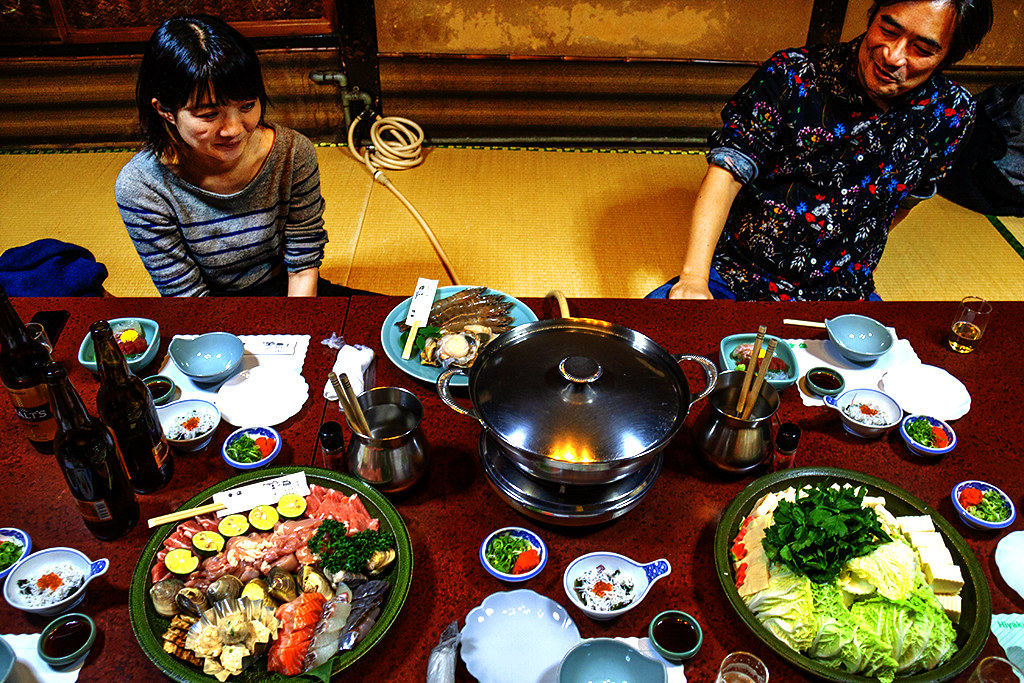
Eating Japanese in Namibia made me think of, well, eating Japanese in Japan. Above is a 11/24/18 photo of a dinner at Taiyoshi Hyakuban, a restaurant converted from an Osaka whorehouse. On the left is Yoko (whose last name I can't recall), the editor of the Japanese editon of my Postcards from the End of America. On the right is sociologist Masahiko Kishi, who introduced and interviewed me at an Osaka bookstore.
Mieko Kawakami was supposed to appear with me at the bookstore, but some nutcase said online he would show up to stab her. As a very famous writer who's also gorgeous, Mieko attracts many lovelorn and sexually frustrated admirers. Maybe in the next life, I can come back as Mieko Kawakami!
Osaka is a magical city. If money wasn't an issue and I could live anywhere, Osaka would be very high on my list.
If you wonder why I sometimes lose my patience with the morons at Unz, it's because, like all sane people, I prefer to deal with civilized human beings.
Friday, December 14, 2018
A More Colorful, Diluted and Dying Japan
As published at OpEd News, Smirking Chimp, Unz Review, TruthSeeker and LewRockwell, 12/14/18:
Generally seen as highly homogenous, Japan is changing fast. In Tokyo, Kawasaki and Osaka recently, I encountered quite a few non-Japanese working at convenience stores and restaurants, and saw many more on the streets. Japan’s largest immigrant groups are Chinese, Koreans, Filipinos, Vietnamese and Brazilians. Though the last are mostly ethnic Japanese, they maintain a separate culture, so are perceived as Brazilians.
In Kawasaki, a city just across a river from Tokyo, I entered a Peruvian restaurant with two Japanese friends, Ryo Isabe and Samson Yee. Born in Hong Kong, Samson spent parts of his childhood in England, has traveled all over and is married to a Japanese, and his spoken Japanese is nearly perfect, I was told. Immediately, Samson identified the woman serving us as not Japanese, although she appeared native enough to me, and had barely said anything. The more she talked, the more her Japanese deficiency was exposed, however. She was Peruvian.
Ryo is a critic, mostly of rap and electronic music, and the author of a book on Kawasaki. On the ribbon over its cover is a question, “Is Kawasaki hell?” Crossing the Tama River from Tokyo, I did notice a row of shacks, erected by the homeless, but by the time the train rolled into the station, everything seemed sparklingly modern and sophisticated. Walking around, I ran into plenty of chic stores and restaurants, and a swanky shopping center, La Cittadella.
Ryo explained that although Kawasaki may appear perfectly normal, there are many underlying problems. In 2015, the city shocked Japan when a 13-year-old boy was tortured and killed, with his naked body tossed into the Tama. Since his main killer, Ryuichi Funabashi, was half-Filipino, immigration, assimilation and ethnicity became uncomfortable subtexts.
For conformity to unite and provide collective strength, it must punish deviations, but this always triggers resentment, if not rage.
On the other hand, the list of successful half-Japanese is long. Half-Taiwanese Renho Murata briefly headed Japan’s Democratic Party, the first woman to do so. Americans are most familiar with half-Iranian Yu Darvish, half-Haitian Naomi Osaka and half-American Hideki Irabu. With the last, I noticed with interest that the half-Yankee insisted on going to the Yankees. Perched on the third deck, third base side, I did manage to watch Irabu pitch at Yankees Stadium. He always seemed like a very isolated, lonely figure. In 2008, the big man assaulted an Osaka bar manager after downing 20 beers, and in 2010, he was arrested for DUI in Redondo Beach. After his uneven career flamed out, Irabu didn’t return to Japan but moved to California, although he associated mostly with other Japanese while there. As his wife and kids were about to leave him, Irabu killed himself, but we can only guess at the multilayered, complex reason.
I asked Ryo to take us to a regular, working class bar, what I’m used to, whether I’m in Kiev, Mexico City or Missoula, so we ended up in some tiny, brightly lit joint that was owned by a Korean woman. That night, it was filled with older Okinawans and a half Russian, half Japanese man who didn’t look typically either. Born in Japan, he was simply Japanese, like the rest.
“Do I look Japanese?” I joked to a septuagenarian, missing a few teeth.
“No, you look Cambodian!” We all laughed.
Sitting at my table, another Okinawan said, “I’ve never known a Vietnamese, but I’m glad to meet you. You should spend more time in Kawasaki, and get to know us.”
“I already feel very comfortable,” and I meant it.
During the Vietnam War, the septuagenarian was paid $20 a day to clean American corpses, killed in action, “It was ten times the average wage, so I was glad to have the job, but I had to quit after six months, since I couldn’t eat.”
In Kawasaki for four decades, he didn’t miss Okinawa, “I don’t have anything to return to.”
When he said he had to work later that night, I thought he was kidding, for he was well past retirement age, not to mention trashed. “I work for the railroad,” he elaborated. “I’m a painter.”
At his table sat a couple, also old, with the man in a felt fedora. “Although I’m married to Frank Sinatra,” she said of her husband while bantering with the painter, “you’re more my type!” She rubbed his bald head.
Though it was Ryo’s first time at the joint, and Samson and I were not Japanese, we were treated so warmly, so so much for Japanese reserve or aloofness, but the English, too, I’ve always found to be mostly friendly and chatty. Damn the stereotype.
Taking a photo with me, the Korean owner planted a kiss on my crown, and the old painter shouted towards the end of the night, “Now, you look very Japanese! You belong here!”
There is a universal brotherhood of lowlife drinkers. My blood brother, a Yahoo employee who says “darn” and “shoot,” wouldn’t feel welcome there, or at Philly’s Friendly Lounge, for that matter, not that he would enter either
In Osaka, the sociologist Masahiko Kishi took me and others to a seafood restaurant, Taiyoshi Hyakuban, that’s housed in a wonderfully-preserved, two-storied 1908 brothel. Wandering around, I marveled at its carved columns, beams and ceilings, fine vases and scrolls, and well-executed paintings of scenes from centuries past. Our three waiters were all South Asians, most likely Bangladeshi. They had no problems communicating in Japanese.
Taiyoshi Hyakuban is located in Tobita Shinchi, Japan’s last traditional red light district, where the prostitutes are openly displayed through wide doorways, facing the street. Tastefully dolled up, each is seated among decorative elements, such as a basket of plastic flowers, stuffed animals, a heart-shaped pillow or a giant Maneki-neko, etc., but with an old woman, the madame, perched in a corner. Though the contrast between youthful beauty and aging ugliness is rather jarring, at least it serves its purpose as a warning and an urge. Get it while you can, and while it’s still fresh!
Tobita Shinchi is nothing like what you’ll find in, say, Amsterdam’s De Wallen, where not much distracts from the red-lit meat of the matter. Though prostitution is illegal in Japan, the Tobita Shinchi joints are kosher because, well, they’re classified as restaurants, so if you suddenly find yourself inside a waitress, it’s because she’s quite smitten by you, that’s all, and your wallet. It’s love at first sight. Maybe you’ll get lucky the next time you visit your town’s Dairy Queen or White Castle!
In Amsterdam, most of the whores are in fact not Dutch, but come from Eastern Europe, South America, Southeast Asia or Africa. The last time I was in Paris’ Bois de Boulogne, most whores were also foreign, and in Barcelona, Chinese massage parlors spread. Assuming a similar situation in Tobita Shinchi, I asked Kishi-san what percentage of these lovelies were aliens, and was surprised to hear, “None!” Well, at least one corner of Japan remains absolutely pure.
A 15-minute date with a Tobita Shinchi waitress will set you back $100, and she’ll time it with a stopwatch, too, such is Japanese precision. If you can’t quite afford that, look for a foreigner elsewhere, for immigrants always translate to cheaper labor, since it’s the main, and often only, reason they’re allowed in.
A Japanese convenience store chain, Lawson, has opened two training centers in Vietnam for jobs in Japan, and near me in Saigon, there’s a billboard recruiting workers for factory, construction, farming and food processing jobs in that country. To qualify, you must be between 18 and 35, “pleasant to look at, in good health, without a contagious disease, HIV or hepatitis B.” Fair enough. The catch is that you must first pay them for lessons in the Japanese language and culture. You will learn when and how to bow, to obey traffic rules, and to refrain from using all public spaces as trash cans, etc.
After months of studies, most bitterly realize they’re just not made to say konichiwa daily, but some do manage to pass all the tests and gain a visa to Japan, where they will be paid $1,300 a month, a handsome sum in Vietnam, but dismal in Japan, especially after taxes and mandatory health insurance. Most still manage to send money back home, however, for they live four to a room, ride a bicycle and skim on everything.
In Osaka’s Ikuno Ward, Koreans have lived for three generations, but now there are also a few thousand Chinese and Vietnamese. Walking its streets and alleys over several days, I found them quiet and clean, with a nice mixture of old and new houses. Inside its quaint though somewhat run-down shopping arcades, there are many Korean barbecue joints and groceries, as well as karaoke bars run by Chinese women. Passing a rare Vietnamese store, I noticed a hand written-sign in Vietnamese, “Friends who come to shop / please be careful to / Not sit on other people’s bicycles / Not gather and be loud in front of the building / And only throw trash at designated places / Thanks, friends” National traits can’t always be modified.
Though only the fourth largest immigrant group, Vietnamese commit the second most number of crimes, behind only the Chinese, and Viets outstrip all in crime ratio. In 2013, 839 Vietnamese were arrested, a pace that’s only increasing, with shoplifting the most common transgression. A Vietnamese website explains, “Working in groups of two, three or four people, they target supermarkets and drug stores [...] The items targeted by Viet criminals include rice, beer and liquor, all types of food, vitamins, cosmetics, diapers, powdered milk and whatever else that’s requested by their customers!”
This business practice must be fairly universal. In Philadelphia, I knew a couple of white shoplifters who regularly sold stolen goods to Center City merchants, and these thieves, too, took orders. If you wanted a specific item from Whole Foods or Target, they’d get it for you before the day’s over.
With shoplifting an increasing problem, it’s ironic that there’s a new, critically acclaimed Japanese film, Shoplifters, that sympathetically portrays a family of thieves.
Vietnamese crimes in Japan, though, aren’t just petty. In Osaka in 2015, a 25-year-old Vietnamese man was killed by six of his compatriots. Surveillance footage shows them chasing him down to beat, stab and stomp him to death, before “leaving the scene as if nothing had happened,” to quote Thanh Nien, a Vietnamese newspaper. The group also seriously injured two other Vietnamese that day. Last month in Osaka, a 22-year-old Vietnamese woman died after being stabbed in the neck by her Vietnamese boyfriend. Since violent crimes are rare in Japan, these murders grabbed headlines.
In 2015, two Vietnamese were arrested for stealing and slaughtering two research goats, kept in a park. One explained that to pay a Vietnamese labor broker, he had to borrow money, with his home as collateral, but in Japan, he was overworked and underpaid, so he kept switching jobs, but he was still destitute, he said, so he resorted to stealing bento lunches and other food from supermarkets. His partner in crime was his unemployed roommate, a man who had dropped out of a junior college because he couldn’t afford tuition. None of this explains why they had to feast on goat meat, or why the Japanese should put up with such lawlessness.
It’s worth noting that the worst behaviors by Vietnamese in Japan are regularly highlighted by the Vietnamese media, since this labor conduit is too lucrative to wreck. As for the Japanese, immigrant criminality is still a small price to pay in exchange for much needed workers. Increasingly withdrawn and celibate, Japanese don’t have nearly enough kids to replace its huge population of retirees, who simply live on and on. Immigrants, then, must be flown in to change their diapers, and turn them over to prevent bedsores.
Japanese media have run many stories highlighting the abuse of foreign employees. Weekly Playboy quotes a Vietnamese woman who was cheated of her worker’s compensation after being hurt at her shipping depot job. Though she had to go to the hospital, she wasn’t even allowed the rest of the day off. Commenting on this story, a Japanese salaryman tellingly relates:
Recently, a video surfaced of a Japanese boss dunking a subordinate’s head, twice, into a boiling shabu shabu pot, during a year’s end party, as a few guests laughed. Though this happened three years ago, the victim never reported the horrible incident to the police, and is only suing now.
Word has certainly gotten out about the often harsh Japanese work environment, so the buzz in Vietnam, for example, is that it’s better to aim for South Korea. Still, many dream of Japan, for there’s never a shortage of desperate people who would do just about anything to live in a First World country.
Employing five Vietnamese, a Japanese construction boss told Nikkei Asian Review, “Foreign trainees learn faster than Japanese. They are more serious, more hardworking, and take fewer days off. They are keen to learn and work hard for money. Few young Japanese show such guts these days.” They’re also cheaper, I repeat, though new laws have been passed to erase this difference.
In a Pew survey, 58% of Japanese are content with the current, record high level of immigration, while 23% actually want even more. This places Japan third among 27 nations, behind only Spain (28%) and the US (24%). Though most immigrants to Japan arrive with only a three-year visa, many will stay longer, even if illegally. Turks in Germany were also meant as temporary solutions. With its newfound openness to immigrants, Japan is becoming more colorful, yet more diluted, maybe for good.
After my last article on Japan, “Telfoed John” brilliantly commented, “All technology which makes the far-away close, makes the close far-away. Whether it’s Shinkansen, Walkmans, pornography… Japan is at the forefront of making the world come to the individual, but at the same time shrinking the soul and personal relations.”
In other words, Japan leads the world in replacing the actual with the virtual, so you have teens who won’t go outside, men screwing sex dolls and old people being comforted by creepy robots, but these arrangements aren’t too satisfying, apparently, for Japan is erasing itself at a frightful pace. In 2017, only 946,060 babies were born there, the lowest number since records began in 1899, so discounting immigrants, its population declined by nearly 400,000. That’s twice the number of people obliterated in Hiroshima and Nagasaki! At this rate, there will only be 500 Japanese left by 3000, according to Japan’s Ministry of Health and Welfare.
What’s happening to Japan is relevant worldwide, for all the most advanced and accomplished populations are shrinking, while the most backward recklessly breed. If you think each child is a blank slate, with roughly equal potentials, then there’s no cause for alarm, but many among us are convinced a nation’s heritage is simply its biology, manifested, so the Cathedral in Siena, for example, is really a chart of the Italian DNA. Japan is one of humanity’s most spectacular yet nuanced achievements.
Judging by its history, Japan is eminently capable of reinventing itself, so with its tremendous human capital still largely intact, perhaps it won’t just save itself, but show us all what to do next.
.
Generally seen as highly homogenous, Japan is changing fast. In Tokyo, Kawasaki and Osaka recently, I encountered quite a few non-Japanese working at convenience stores and restaurants, and saw many more on the streets. Japan’s largest immigrant groups are Chinese, Koreans, Filipinos, Vietnamese and Brazilians. Though the last are mostly ethnic Japanese, they maintain a separate culture, so are perceived as Brazilians.
In Kawasaki, a city just across a river from Tokyo, I entered a Peruvian restaurant with two Japanese friends, Ryo Isabe and Samson Yee. Born in Hong Kong, Samson spent parts of his childhood in England, has traveled all over and is married to a Japanese, and his spoken Japanese is nearly perfect, I was told. Immediately, Samson identified the woman serving us as not Japanese, although she appeared native enough to me, and had barely said anything. The more she talked, the more her Japanese deficiency was exposed, however. She was Peruvian.
Ryo is a critic, mostly of rap and electronic music, and the author of a book on Kawasaki. On the ribbon over its cover is a question, “Is Kawasaki hell?” Crossing the Tama River from Tokyo, I did notice a row of shacks, erected by the homeless, but by the time the train rolled into the station, everything seemed sparklingly modern and sophisticated. Walking around, I ran into plenty of chic stores and restaurants, and a swanky shopping center, La Cittadella.
Ryo explained that although Kawasaki may appear perfectly normal, there are many underlying problems. In 2015, the city shocked Japan when a 13-year-old boy was tortured and killed, with his naked body tossed into the Tama. Since his main killer, Ryuichi Funabashi, was half-Filipino, immigration, assimilation and ethnicity became uncomfortable subtexts.
For conformity to unite and provide collective strength, it must punish deviations, but this always triggers resentment, if not rage.
On the other hand, the list of successful half-Japanese is long. Half-Taiwanese Renho Murata briefly headed Japan’s Democratic Party, the first woman to do so. Americans are most familiar with half-Iranian Yu Darvish, half-Haitian Naomi Osaka and half-American Hideki Irabu. With the last, I noticed with interest that the half-Yankee insisted on going to the Yankees. Perched on the third deck, third base side, I did manage to watch Irabu pitch at Yankees Stadium. He always seemed like a very isolated, lonely figure. In 2008, the big man assaulted an Osaka bar manager after downing 20 beers, and in 2010, he was arrested for DUI in Redondo Beach. After his uneven career flamed out, Irabu didn’t return to Japan but moved to California, although he associated mostly with other Japanese while there. As his wife and kids were about to leave him, Irabu killed himself, but we can only guess at the multilayered, complex reason.
I asked Ryo to take us to a regular, working class bar, what I’m used to, whether I’m in Kiev, Mexico City or Missoula, so we ended up in some tiny, brightly lit joint that was owned by a Korean woman. That night, it was filled with older Okinawans and a half Russian, half Japanese man who didn’t look typically either. Born in Japan, he was simply Japanese, like the rest.
“Do I look Japanese?” I joked to a septuagenarian, missing a few teeth.
“No, you look Cambodian!” We all laughed.
Sitting at my table, another Okinawan said, “I’ve never known a Vietnamese, but I’m glad to meet you. You should spend more time in Kawasaki, and get to know us.”
“I already feel very comfortable,” and I meant it.
During the Vietnam War, the septuagenarian was paid $20 a day to clean American corpses, killed in action, “It was ten times the average wage, so I was glad to have the job, but I had to quit after six months, since I couldn’t eat.”
In Kawasaki for four decades, he didn’t miss Okinawa, “I don’t have anything to return to.”
When he said he had to work later that night, I thought he was kidding, for he was well past retirement age, not to mention trashed. “I work for the railroad,” he elaborated. “I’m a painter.”
At his table sat a couple, also old, with the man in a felt fedora. “Although I’m married to Frank Sinatra,” she said of her husband while bantering with the painter, “you’re more my type!” She rubbed his bald head.
Though it was Ryo’s first time at the joint, and Samson and I were not Japanese, we were treated so warmly, so so much for Japanese reserve or aloofness, but the English, too, I’ve always found to be mostly friendly and chatty. Damn the stereotype.
Taking a photo with me, the Korean owner planted a kiss on my crown, and the old painter shouted towards the end of the night, “Now, you look very Japanese! You belong here!”
There is a universal brotherhood of lowlife drinkers. My blood brother, a Yahoo employee who says “darn” and “shoot,” wouldn’t feel welcome there, or at Philly’s Friendly Lounge, for that matter, not that he would enter either
In Osaka, the sociologist Masahiko Kishi took me and others to a seafood restaurant, Taiyoshi Hyakuban, that’s housed in a wonderfully-preserved, two-storied 1908 brothel. Wandering around, I marveled at its carved columns, beams and ceilings, fine vases and scrolls, and well-executed paintings of scenes from centuries past. Our three waiters were all South Asians, most likely Bangladeshi. They had no problems communicating in Japanese.
Taiyoshi Hyakuban is located in Tobita Shinchi, Japan’s last traditional red light district, where the prostitutes are openly displayed through wide doorways, facing the street. Tastefully dolled up, each is seated among decorative elements, such as a basket of plastic flowers, stuffed animals, a heart-shaped pillow or a giant Maneki-neko, etc., but with an old woman, the madame, perched in a corner. Though the contrast between youthful beauty and aging ugliness is rather jarring, at least it serves its purpose as a warning and an urge. Get it while you can, and while it’s still fresh!
Tobita Shinchi is nothing like what you’ll find in, say, Amsterdam’s De Wallen, where not much distracts from the red-lit meat of the matter. Though prostitution is illegal in Japan, the Tobita Shinchi joints are kosher because, well, they’re classified as restaurants, so if you suddenly find yourself inside a waitress, it’s because she’s quite smitten by you, that’s all, and your wallet. It’s love at first sight. Maybe you’ll get lucky the next time you visit your town’s Dairy Queen or White Castle!
In Amsterdam, most of the whores are in fact not Dutch, but come from Eastern Europe, South America, Southeast Asia or Africa. The last time I was in Paris’ Bois de Boulogne, most whores were also foreign, and in Barcelona, Chinese massage parlors spread. Assuming a similar situation in Tobita Shinchi, I asked Kishi-san what percentage of these lovelies were aliens, and was surprised to hear, “None!” Well, at least one corner of Japan remains absolutely pure.
A 15-minute date with a Tobita Shinchi waitress will set you back $100, and she’ll time it with a stopwatch, too, such is Japanese precision. If you can’t quite afford that, look for a foreigner elsewhere, for immigrants always translate to cheaper labor, since it’s the main, and often only, reason they’re allowed in.
A Japanese convenience store chain, Lawson, has opened two training centers in Vietnam for jobs in Japan, and near me in Saigon, there’s a billboard recruiting workers for factory, construction, farming and food processing jobs in that country. To qualify, you must be between 18 and 35, “pleasant to look at, in good health, without a contagious disease, HIV or hepatitis B.” Fair enough. The catch is that you must first pay them for lessons in the Japanese language and culture. You will learn when and how to bow, to obey traffic rules, and to refrain from using all public spaces as trash cans, etc.
After months of studies, most bitterly realize they’re just not made to say konichiwa daily, but some do manage to pass all the tests and gain a visa to Japan, where they will be paid $1,300 a month, a handsome sum in Vietnam, but dismal in Japan, especially after taxes and mandatory health insurance. Most still manage to send money back home, however, for they live four to a room, ride a bicycle and skim on everything.
In Osaka’s Ikuno Ward, Koreans have lived for three generations, but now there are also a few thousand Chinese and Vietnamese. Walking its streets and alleys over several days, I found them quiet and clean, with a nice mixture of old and new houses. Inside its quaint though somewhat run-down shopping arcades, there are many Korean barbecue joints and groceries, as well as karaoke bars run by Chinese women. Passing a rare Vietnamese store, I noticed a hand written-sign in Vietnamese, “Friends who come to shop / please be careful to / Not sit on other people’s bicycles / Not gather and be loud in front of the building / And only throw trash at designated places / Thanks, friends” National traits can’t always be modified.
Though only the fourth largest immigrant group, Vietnamese commit the second most number of crimes, behind only the Chinese, and Viets outstrip all in crime ratio. In 2013, 839 Vietnamese were arrested, a pace that’s only increasing, with shoplifting the most common transgression. A Vietnamese website explains, “Working in groups of two, three or four people, they target supermarkets and drug stores [...] The items targeted by Viet criminals include rice, beer and liquor, all types of food, vitamins, cosmetics, diapers, powdered milk and whatever else that’s requested by their customers!”
This business practice must be fairly universal. In Philadelphia, I knew a couple of white shoplifters who regularly sold stolen goods to Center City merchants, and these thieves, too, took orders. If you wanted a specific item from Whole Foods or Target, they’d get it for you before the day’s over.
With shoplifting an increasing problem, it’s ironic that there’s a new, critically acclaimed Japanese film, Shoplifters, that sympathetically portrays a family of thieves.
Vietnamese crimes in Japan, though, aren’t just petty. In Osaka in 2015, a 25-year-old Vietnamese man was killed by six of his compatriots. Surveillance footage shows them chasing him down to beat, stab and stomp him to death, before “leaving the scene as if nothing had happened,” to quote Thanh Nien, a Vietnamese newspaper. The group also seriously injured two other Vietnamese that day. Last month in Osaka, a 22-year-old Vietnamese woman died after being stabbed in the neck by her Vietnamese boyfriend. Since violent crimes are rare in Japan, these murders grabbed headlines.
In 2015, two Vietnamese were arrested for stealing and slaughtering two research goats, kept in a park. One explained that to pay a Vietnamese labor broker, he had to borrow money, with his home as collateral, but in Japan, he was overworked and underpaid, so he kept switching jobs, but he was still destitute, he said, so he resorted to stealing bento lunches and other food from supermarkets. His partner in crime was his unemployed roommate, a man who had dropped out of a junior college because he couldn’t afford tuition. None of this explains why they had to feast on goat meat, or why the Japanese should put up with such lawlessness.
It’s worth noting that the worst behaviors by Vietnamese in Japan are regularly highlighted by the Vietnamese media, since this labor conduit is too lucrative to wreck. As for the Japanese, immigrant criminality is still a small price to pay in exchange for much needed workers. Increasingly withdrawn and celibate, Japanese don’t have nearly enough kids to replace its huge population of retirees, who simply live on and on. Immigrants, then, must be flown in to change their diapers, and turn them over to prevent bedsores.
Japanese media have run many stories highlighting the abuse of foreign employees. Weekly Playboy quotes a Vietnamese woman who was cheated of her worker’s compensation after being hurt at her shipping depot job. Though she had to go to the hospital, she wasn’t even allowed the rest of the day off. Commenting on this story, a Japanese salaryman tellingly relates:
A few years ago I had an accident in Japan riding my bicycle to work. (A truck struck my arm.) Luckily I wasn’t hurt (as in broken bones), but quite bruised, in pain and shocked of course.
So, since I didn’t have any permanent injury and like the good salaryman I was, I bit my teeth and went to work anyway. I was late of course and also wanted to make sure my employer understood what happened, so I reported to my supervisor.
At first he was mildly curious, but then he just wanted to know if I could work today. So that was that.
A while later he came back to me to inform me that I would be censured because I took my bicycle to get to the station, which was against company regulations [...] Frankly I think, that such a regulation is a cowardly and irresponsible act on behalf of the company. Also, due to my low salary I couldn’t afford anything close to the station [...]
So, instead of “are you OK?,” “do you want to take a day off?” I basically got censured for being the victim of a traffic accident due to breaking a cowardly “no responsibility” rule. So THAT’s what’s important eh? ...
Recently, a video surfaced of a Japanese boss dunking a subordinate’s head, twice, into a boiling shabu shabu pot, during a year’s end party, as a few guests laughed. Though this happened three years ago, the victim never reported the horrible incident to the police, and is only suing now.
Word has certainly gotten out about the often harsh Japanese work environment, so the buzz in Vietnam, for example, is that it’s better to aim for South Korea. Still, many dream of Japan, for there’s never a shortage of desperate people who would do just about anything to live in a First World country.
Employing five Vietnamese, a Japanese construction boss told Nikkei Asian Review, “Foreign trainees learn faster than Japanese. They are more serious, more hardworking, and take fewer days off. They are keen to learn and work hard for money. Few young Japanese show such guts these days.” They’re also cheaper, I repeat, though new laws have been passed to erase this difference.
In a Pew survey, 58% of Japanese are content with the current, record high level of immigration, while 23% actually want even more. This places Japan third among 27 nations, behind only Spain (28%) and the US (24%). Though most immigrants to Japan arrive with only a three-year visa, many will stay longer, even if illegally. Turks in Germany were also meant as temporary solutions. With its newfound openness to immigrants, Japan is becoming more colorful, yet more diluted, maybe for good.
After my last article on Japan, “Telfoed John” brilliantly commented, “All technology which makes the far-away close, makes the close far-away. Whether it’s Shinkansen, Walkmans, pornography… Japan is at the forefront of making the world come to the individual, but at the same time shrinking the soul and personal relations.”
In other words, Japan leads the world in replacing the actual with the virtual, so you have teens who won’t go outside, men screwing sex dolls and old people being comforted by creepy robots, but these arrangements aren’t too satisfying, apparently, for Japan is erasing itself at a frightful pace. In 2017, only 946,060 babies were born there, the lowest number since records began in 1899, so discounting immigrants, its population declined by nearly 400,000. That’s twice the number of people obliterated in Hiroshima and Nagasaki! At this rate, there will only be 500 Japanese left by 3000, according to Japan’s Ministry of Health and Welfare.
What’s happening to Japan is relevant worldwide, for all the most advanced and accomplished populations are shrinking, while the most backward recklessly breed. If you think each child is a blank slate, with roughly equal potentials, then there’s no cause for alarm, but many among us are convinced a nation’s heritage is simply its biology, manifested, so the Cathedral in Siena, for example, is really a chart of the Italian DNA. Japan is one of humanity’s most spectacular yet nuanced achievements.
Judging by its history, Japan is eminently capable of reinventing itself, so with its tremendous human capital still largely intact, perhaps it won’t just save itself, but show us all what to do next.
.
Friday, December 7, 2018
Kawaii, Somber Japan
As published at Unz Review, Intrepid Report, Smirking Chimp, OpEd News, TruthSeeker, LewRockwell and TruthSeeker, 12/9/18:
Before my recent trip to Tokyo, Kawasaki and Osaka, I emailed an American friend, “Japan contrasts so sharply with chaotic and dirty Vietnam. Unlike here, almost nothing happens on Japanese sidewalks, no eating, drinking or even smoking!”
He replied, “Myself, I would prefer ‘dirty’ Vietnam to Japan, any day.” Though only in Vietnam as a soldier, he still has fond memories of the country.
On the way to Tan Son Nhat Airport, the young taxi driver asked where I was flying to.
“Tokyo, I answered. “It’s my second time. They have a great subway system, brother,” and it is the most reliable, cleanest, safest and easiest I’ve ever used, with great amenities at most stations. “Who knows when Vietnam will have something similar?”
He guffawed, “We’re five hundred years behind them!”
From Narita, I took three trains to Nippori, Hamamatsucho then Azabujyuban, from where I walked to my room at International House. On the way, I passed the Juban Inari Shrine. All Japanese temples are elegant and understated, even when huge. Crossing the street was suddenly no longer an adventure. Though Vietnamese have become much better at stopping at red lights, many still bristle at the idea.
Japanese do occasionally jaywalk, and I would see more of it in Osaka than Tokyo. There are also more graffiti and littering in the home of takoyaki, Japan’s only remaining red light district and its worst slum. Japanese are not as anal as Germans, who would stand alone at a curb at 3 in the morning, waiting for the walk signal to change, with not a single car in sight in any direction.
Opening the shoji blind, I could see the tastefully landscaped garden where Yukio Mishima had his wedding reception. After unpacking, I became reacquainted with the heated toilet seat, the anus shower whose jets could be adjusted and, most comfortingly, the stream of warm air that dried even my nuts.
Vietnam’s leading novelist of that era, Nhất Linh, also committed suicide, but only quietly, with poisoned wine. Unlike badass Mishima, Nhất Linh didn’t have a gay lover hack at his neck repeatedly with a samurai sword.
During my previous visit to Tokyo, I spoke to a bookstore audience of my admiration for Japanese boldness, “Although transgenderism is in, with everybody cutting his penis off, only a Japanese could come up with the idea of offering it as a meal, at a banquet.” To my surprise, no one there had heard of Mao Sugiyama.
Sugiyama’s ballsy announcement, “Please retweet. I am offering my male genitals (full penis, testes, scrotum) as a meal for 100,000 yen… I will prepare and cook as the buyer requests, at his chosen location.”
There was no time to waste. Within hours of arriving, I was in a Roppongi restaurant with a few of my Tokyo friends. While downing beer and sashimi, we talked about their troubled nation.
Translator Miwako Ozawa shared that she didn’t know her neighbors, and that Japanese only say hello to strangers in elevators and on mountain trails. Her husband, photographer Samson Yee, added that I shouldn’t judge Japanese sociability by my friends, for they are all cosmopolitan writers and intellectuals, “If you meet an ordinary Japanese, you’ll have to climb so many walls before you get to know them.” As another indicator of the Japanese’s shrinkage from direct experiences, Samson pointed out that only 23% even hold a valid passport.
We’ve all heard about young Japanese recluses, the hikikomori, but did you know that at least 43% of Japanese between 18 and 34 are virgins? A third had never even been on a single date.
“How did Japanese go from bathing together, men and women, young and old, to being mostly alone?” I asked. No one could answer.
Writer Mieko Kawakami said that Japan’s previous tranquility and equilibrium were achieved only with much sacrifice by women, and the continuing breakdown of traditions is actually freeing women from onerous roles. Probing this theme, she is working on a novel about a woman having a baby without a man.
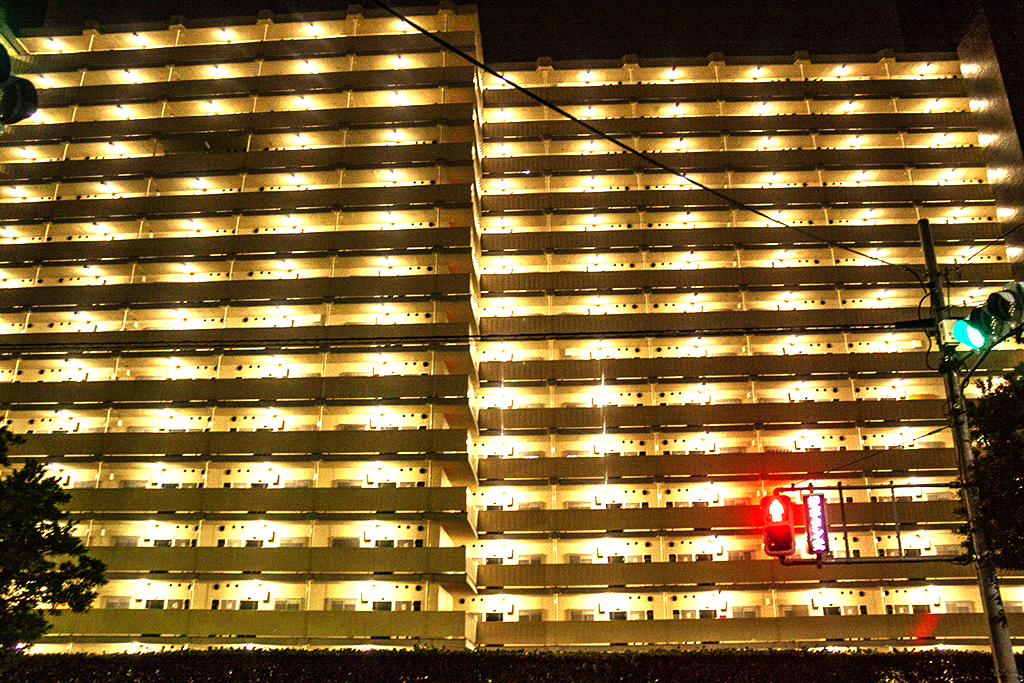
Many Japanese now live alone, then often die without anyone noticing, sometimes for weeks. Family members don’t call or even email them. Through a friend, I was able to visit an octogenarian who rarely left his messy apartment. His is the generation that built contemporary Japan. In the same complex, we passed a door whose letter and peep slots had been sealed by tape, to prevent the dogged stench of putrefaction from seeping out. It’s a common sight there. With its stigma of sordid death, the apartment will be hard to rent, thus adding to the glut of empty houses in Japan.
The live man’s apartment smelled bad enough. It's a stagnant, fermented funk which actually made me pause at his genkan, and I'm no olfactory pussy, dwelling in Saigon. Carrying two six packs of Asahi beer as gifts, I braved my way in.
Next to his bed were six bottles of hard liquor and a stack of illustrated sex manuals. Cheered up by such rare visitors, he chattered away, and anyone could tell he must have been quite charismatic in youth, and a ladies' man. He admitted to having a crush on the woman, sent by a charity organization, who came twice a week to clean.
“Is she young?” I grinningly asked.
“Yes, very young. Maybe 55!”
The neighborhood was a post-war new town development, filled with identical apartment blocks, and very few stores or restaurants within easy walking distance, especially if you’re on your last leg. A playground with its slide and jungle gym sat empty. “This is incredible,” I said to my friend. “We haven’t passed one cafe or bar. If this was Vietnam, people would just sit outside, drink and socialize.” There was a tiny seniors center at a forlorn strip mall. We strayed in to find six old people lounging around a coffee table, sipping tea. When they all got up to leave, I asked, “Why are they all leaving at once?”
“It’s the Japanese way. We do everything together!” Or at least they used to.
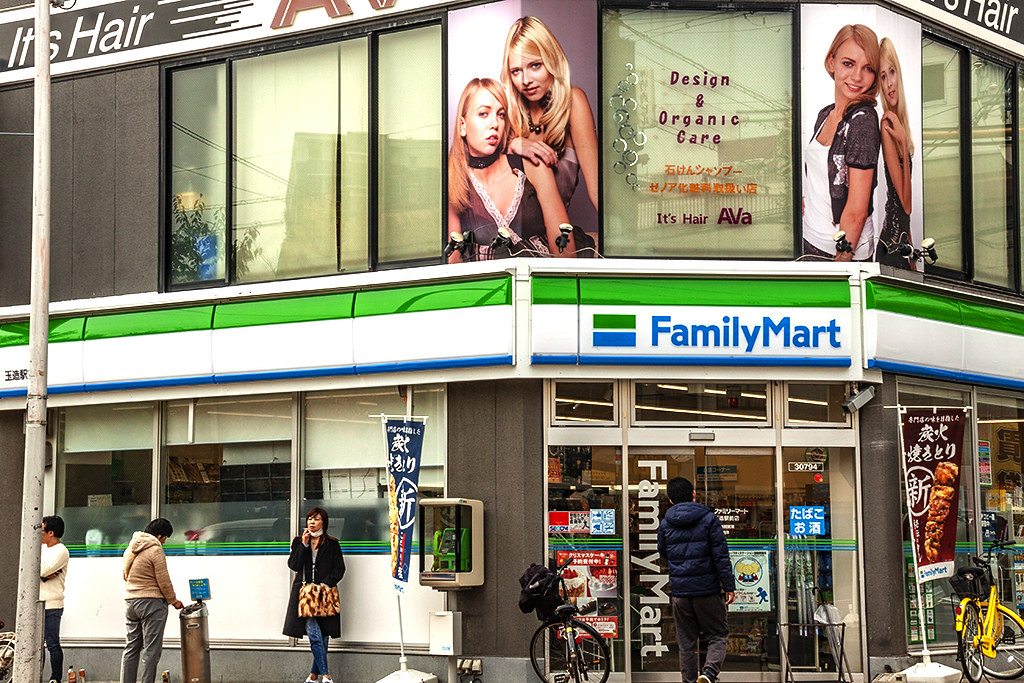
Convenience stores are ubiquitous in Japan. At a Family Mart, the owner told us that for many old people nearby, his little store was not just where they could get grocery, but a few words addressed to them, plus a smile.
In Japan, more than a third of the population are older than 60, and adult diapers outsell those for babies, yet everywhere you look, there are cartoon figures. It’s a country that balances its business suit graveness with the infantile. A supermarket chain’s logo is a kawaii dog, with a slogan in English, “Smile every day!” Vending machines feature a round-eyed boy flashing a victory sign, “We’ll Be Happy!” Pachinko parlors are tsunamis of cartoon characters and childish colors.
One day, I talked to a class at Waseda University, and among the students was a remarkable 20-year-old. Having lived in Indonesia and Australia, she was fluent in Indonesian and English by age 15, but for three years in high school, took English courses, like everybody else, and to not show up her classmates or teachers, pretended she didn’t already know the language, and even faked a Japanese accent. At age 16, she became an idol singer, thus a minor celebrity. Idol starlets are presented as impossibly cute airheads, thus her profile page lists her interests as Rilakkuma, teddy bears and panda dolls, but away from this public persona and obligation, she is a supremely mature and confident woman.
Her singing career, then, is merely theater, a form of cosplay, and she’s been playing it well, but it’s nearly time to move on, hence her serious studies at a good university. Japan, too, has shown an exceptional ability to switch gears. From not eating beef for over a millennium, it now produces the best beef in the world. Overnight, it went from being America’s fiercest enemy to its most ardent emulator.
In contrast to the spectacularly colorful images of Ginza or Shinjuku, much of Tokyo is rather drab, and its citizens are mostly dressed quite somberly. As for school kids, they’re austerely uniformed. Even Germans aren’t so severely attired. For most Japanese, then, the windows for making any individual statement, in fashion or anything else, are actually tiny.
At a subway station, there’s a poster reminding people to hold onto the handrail while riding the escalator. The illustraton showed two long rows of commuters, separated by sex, with all the men in identical blue suits and yellow ties, and all the women in identical pink coats.
In Vietnam, the improvised, slap dash and sloppy are routine, but in Japan, each detail has been well-calibrated, and every gesture well-choreographed and rehearsed. This rigorous attention to particulars result in Japan’s stunning beauty, for nothing there is ugly, not even its kitsch, but perhaps I’m just betraying my gaudy Vietnamese esthetics here. In Osaka, there’s a supermarket chain, Super Tamade, that features bombastic, multi-colored displays of lights outside, while over the merchandises, there are neon and crayon-colored cartoon whales, dolphins, octopuses, blow fish, submarines, airplanes and helicopters, etc. Pointing out a Super Tamade, my Japanese friends expected me to laughingly sneer, but I only swooned, “That is very beautiful.” Who needs Jeff Koons or acid when you can just shop at Super Tamade?
In Shibuya, I stared for a good minute at a small, round, cast iron plate on the sidewalk, because the floral pattern on it was so gorgeous, and many Japanese manhole covers belong in art museums.
Dining with editor Shigeki Tabata, I picked up a bottle of soy sauce and gushed, “Look at how beautiful this graphic is. Look at this subtle greenish gray!”
Editor and translator Motoyuki Shibata tempered my enthusiasm, “When everything is overly determined, it can be oppressive,” and I do agree, and perhaps Japanese life should be more unscripted, for the sake of its stressed out citizens. High, exact standards are particularly burdensome to those who have to serve, Samson pointed out to me, and he’s witnessed angry commuters scream at subway employees.
Even more than Singapore, Japan is filled with signs telling everyone to do everything. At a small neighborhood temple, I encountered a sign showing a round-eyed schoolgirl in uniform, and instructions on “How to worship.” Written in both English and Japanese, they weren’t just meant for ignorant foreigners, “1. Bow twice. 2. Clap your hands twice and pray. 3. Bow once more.” At subway stations, there are elaborate charts showing which numbered car to get into to make your particular transfer the easiest. Near apartments blocks filled with old people, large signs encourage you to say hello and smile at the old farts to cheer them up. Sidewalks are pasted with warnings against smoking in public. Hotel lobbies forbid the use of cellphones. Has there ever been a more anal society?
In Vietnam, on the other hand, rules and boundaries are often never acknowledged or ignored, so everything blurs and blends. Very well-traveled, with three years in Africa and one in India, Samson has visited Vietnam three times. Like me, he likes to wander aimlessly, so once found himself in an alley, where he sat down at a restaurant table. Only after minutes did a woman appear to give him a cup of tea.
“I’d like a menu, please,” he asked, but she looked surprised.
“Menu?”
“Yes, a menu, please.”
She laughed, “This no restaurant. This, house!”
Every state uses its educational system to indoctrinate, and in Japanese schools, kids are forced to form human pyramids, as high as ten tiers, a practice that each year causes more than 8,000 injuries requiring insurance payments. On her phone, Mieko Kawakami showed me image after image of children perilously stacked. From 1969 to 2016, there were actually nine deaths from kumitaiso, but to infuse unity and a sense of collective achievement, it persists, to the disgust and anguish of many parents.
Check out Kyary Pamyu Pamyu in her music video, “Candy Candy,” sung in infantile English. At the beginning, she runs, most bizarrely, with a piece of toast in her mouth, past a row of suburban houses, with their parked cars, manicured shrubs and kids’ sporting equipment. With her huge pink hairbow, strawberry colored hair and a pale pink and purple skirt that resembles an upside down lotus, deifying her nether regions, she’s a kawaii fantasy streaking through drab and uniform normalcy.
In Osaka, middle-aged women are known for their short curls and preference for clothing with the spots, stripes or face of their favorite big cat, but in four days of roaming the city, from its lowest to most chichi neighborhoods, I encountered only a single cheetah or tiger fashionista. Hopefully, this regional distinctiveness is not fading. Roar on, Osaka oba-chan!
To the amusement of my Japanese friends, I kept returning to Jonathan’s, a chain restaurant, for there I found an evocation of a much gentler and cheesier America. Many dishes were Japanese spins on American comfort food. Bathed in bright lights and muzak, I happily ate hamburger patty smothered in demi-glace, roast beef kissed with a mild horseradish, fried chicken, potato wedges, french fries, corn and spaghetti, the last prepared with salmon roe, scallops and seaweed. The Coke, 7-up and punch flowed endlessly at the drink bar. I felt returned to a much improved version of my school cafeteria in Tacoma, Washington. There was a curious offering called “doria,” which turned out to be a rice gratin, topped in this instance by four Hiroshima oysters. Yum, yum, yum. Near the cash register was a selection of cheap toys, and the plastic coffee cups came in baby blue, pink and yellow.
Perhaps because so much has been lost, nostalgia, even for someone else’s past, is a strong undercurrent in Japan. One manifestation of this is the pervasive cult of childhood, when all doors are supposedly still open. In his crisp, well-tailored suit, a virginal salaryman stares at the soft porn dancing girls while colored lights flash and hundreds of metal pellets bounce downward. Though with the world on his shoulders, he’s still a child.
Before my recent trip to Tokyo, Kawasaki and Osaka, I emailed an American friend, “Japan contrasts so sharply with chaotic and dirty Vietnam. Unlike here, almost nothing happens on Japanese sidewalks, no eating, drinking or even smoking!”
He replied, “Myself, I would prefer ‘dirty’ Vietnam to Japan, any day.” Though only in Vietnam as a soldier, he still has fond memories of the country.
On the way to Tan Son Nhat Airport, the young taxi driver asked where I was flying to.
“Tokyo, I answered. “It’s my second time. They have a great subway system, brother,” and it is the most reliable, cleanest, safest and easiest I’ve ever used, with great amenities at most stations. “Who knows when Vietnam will have something similar?”
He guffawed, “We’re five hundred years behind them!”
From Narita, I took three trains to Nippori, Hamamatsucho then Azabujyuban, from where I walked to my room at International House. On the way, I passed the Juban Inari Shrine. All Japanese temples are elegant and understated, even when huge. Crossing the street was suddenly no longer an adventure. Though Vietnamese have become much better at stopping at red lights, many still bristle at the idea.
Japanese do occasionally jaywalk, and I would see more of it in Osaka than Tokyo. There are also more graffiti and littering in the home of takoyaki, Japan’s only remaining red light district and its worst slum. Japanese are not as anal as Germans, who would stand alone at a curb at 3 in the morning, waiting for the walk signal to change, with not a single car in sight in any direction.
Opening the shoji blind, I could see the tastefully landscaped garden where Yukio Mishima had his wedding reception. After unpacking, I became reacquainted with the heated toilet seat, the anus shower whose jets could be adjusted and, most comfortingly, the stream of warm air that dried even my nuts.
Vietnam’s leading novelist of that era, Nhất Linh, also committed suicide, but only quietly, with poisoned wine. Unlike badass Mishima, Nhất Linh didn’t have a gay lover hack at his neck repeatedly with a samurai sword.
During my previous visit to Tokyo, I spoke to a bookstore audience of my admiration for Japanese boldness, “Although transgenderism is in, with everybody cutting his penis off, only a Japanese could come up with the idea of offering it as a meal, at a banquet.” To my surprise, no one there had heard of Mao Sugiyama.
Sugiyama’s ballsy announcement, “Please retweet. I am offering my male genitals (full penis, testes, scrotum) as a meal for 100,000 yen… I will prepare and cook as the buyer requests, at his chosen location.”
There was no time to waste. Within hours of arriving, I was in a Roppongi restaurant with a few of my Tokyo friends. While downing beer and sashimi, we talked about their troubled nation.
Translator Miwako Ozawa shared that she didn’t know her neighbors, and that Japanese only say hello to strangers in elevators and on mountain trails. Her husband, photographer Samson Yee, added that I shouldn’t judge Japanese sociability by my friends, for they are all cosmopolitan writers and intellectuals, “If you meet an ordinary Japanese, you’ll have to climb so many walls before you get to know them.” As another indicator of the Japanese’s shrinkage from direct experiences, Samson pointed out that only 23% even hold a valid passport.
We’ve all heard about young Japanese recluses, the hikikomori, but did you know that at least 43% of Japanese between 18 and 34 are virgins? A third had never even been on a single date.
“How did Japanese go from bathing together, men and women, young and old, to being mostly alone?” I asked. No one could answer.
Writer Mieko Kawakami said that Japan’s previous tranquility and equilibrium were achieved only with much sacrifice by women, and the continuing breakdown of traditions is actually freeing women from onerous roles. Probing this theme, she is working on a novel about a woman having a baby without a man.
Many Japanese now live alone, then often die without anyone noticing, sometimes for weeks. Family members don’t call or even email them. Through a friend, I was able to visit an octogenarian who rarely left his messy apartment. His is the generation that built contemporary Japan. In the same complex, we passed a door whose letter and peep slots had been sealed by tape, to prevent the dogged stench of putrefaction from seeping out. It’s a common sight there. With its stigma of sordid death, the apartment will be hard to rent, thus adding to the glut of empty houses in Japan.
The live man’s apartment smelled bad enough. It's a stagnant, fermented funk which actually made me pause at his genkan, and I'm no olfactory pussy, dwelling in Saigon. Carrying two six packs of Asahi beer as gifts, I braved my way in.
Next to his bed were six bottles of hard liquor and a stack of illustrated sex manuals. Cheered up by such rare visitors, he chattered away, and anyone could tell he must have been quite charismatic in youth, and a ladies' man. He admitted to having a crush on the woman, sent by a charity organization, who came twice a week to clean.
“Is she young?” I grinningly asked.
“Yes, very young. Maybe 55!”
The neighborhood was a post-war new town development, filled with identical apartment blocks, and very few stores or restaurants within easy walking distance, especially if you’re on your last leg. A playground with its slide and jungle gym sat empty. “This is incredible,” I said to my friend. “We haven’t passed one cafe or bar. If this was Vietnam, people would just sit outside, drink and socialize.” There was a tiny seniors center at a forlorn strip mall. We strayed in to find six old people lounging around a coffee table, sipping tea. When they all got up to leave, I asked, “Why are they all leaving at once?”
“It’s the Japanese way. We do everything together!” Or at least they used to.
Convenience stores are ubiquitous in Japan. At a Family Mart, the owner told us that for many old people nearby, his little store was not just where they could get grocery, but a few words addressed to them, plus a smile.
In Japan, more than a third of the population are older than 60, and adult diapers outsell those for babies, yet everywhere you look, there are cartoon figures. It’s a country that balances its business suit graveness with the infantile. A supermarket chain’s logo is a kawaii dog, with a slogan in English, “Smile every day!” Vending machines feature a round-eyed boy flashing a victory sign, “We’ll Be Happy!” Pachinko parlors are tsunamis of cartoon characters and childish colors.
One day, I talked to a class at Waseda University, and among the students was a remarkable 20-year-old. Having lived in Indonesia and Australia, she was fluent in Indonesian and English by age 15, but for three years in high school, took English courses, like everybody else, and to not show up her classmates or teachers, pretended she didn’t already know the language, and even faked a Japanese accent. At age 16, she became an idol singer, thus a minor celebrity. Idol starlets are presented as impossibly cute airheads, thus her profile page lists her interests as Rilakkuma, teddy bears and panda dolls, but away from this public persona and obligation, she is a supremely mature and confident woman.
Her singing career, then, is merely theater, a form of cosplay, and she’s been playing it well, but it’s nearly time to move on, hence her serious studies at a good university. Japan, too, has shown an exceptional ability to switch gears. From not eating beef for over a millennium, it now produces the best beef in the world. Overnight, it went from being America’s fiercest enemy to its most ardent emulator.
In contrast to the spectacularly colorful images of Ginza or Shinjuku, much of Tokyo is rather drab, and its citizens are mostly dressed quite somberly. As for school kids, they’re austerely uniformed. Even Germans aren’t so severely attired. For most Japanese, then, the windows for making any individual statement, in fashion or anything else, are actually tiny.
At a subway station, there’s a poster reminding people to hold onto the handrail while riding the escalator. The illustraton showed two long rows of commuters, separated by sex, with all the men in identical blue suits and yellow ties, and all the women in identical pink coats.
In Vietnam, the improvised, slap dash and sloppy are routine, but in Japan, each detail has been well-calibrated, and every gesture well-choreographed and rehearsed. This rigorous attention to particulars result in Japan’s stunning beauty, for nothing there is ugly, not even its kitsch, but perhaps I’m just betraying my gaudy Vietnamese esthetics here. In Osaka, there’s a supermarket chain, Super Tamade, that features bombastic, multi-colored displays of lights outside, while over the merchandises, there are neon and crayon-colored cartoon whales, dolphins, octopuses, blow fish, submarines, airplanes and helicopters, etc. Pointing out a Super Tamade, my Japanese friends expected me to laughingly sneer, but I only swooned, “That is very beautiful.” Who needs Jeff Koons or acid when you can just shop at Super Tamade?
In Shibuya, I stared for a good minute at a small, round, cast iron plate on the sidewalk, because the floral pattern on it was so gorgeous, and many Japanese manhole covers belong in art museums.
Dining with editor Shigeki Tabata, I picked up a bottle of soy sauce and gushed, “Look at how beautiful this graphic is. Look at this subtle greenish gray!”
Editor and translator Motoyuki Shibata tempered my enthusiasm, “When everything is overly determined, it can be oppressive,” and I do agree, and perhaps Japanese life should be more unscripted, for the sake of its stressed out citizens. High, exact standards are particularly burdensome to those who have to serve, Samson pointed out to me, and he’s witnessed angry commuters scream at subway employees.
Even more than Singapore, Japan is filled with signs telling everyone to do everything. At a small neighborhood temple, I encountered a sign showing a round-eyed schoolgirl in uniform, and instructions on “How to worship.” Written in both English and Japanese, they weren’t just meant for ignorant foreigners, “1. Bow twice. 2. Clap your hands twice and pray. 3. Bow once more.” At subway stations, there are elaborate charts showing which numbered car to get into to make your particular transfer the easiest. Near apartments blocks filled with old people, large signs encourage you to say hello and smile at the old farts to cheer them up. Sidewalks are pasted with warnings against smoking in public. Hotel lobbies forbid the use of cellphones. Has there ever been a more anal society?
In Vietnam, on the other hand, rules and boundaries are often never acknowledged or ignored, so everything blurs and blends. Very well-traveled, with three years in Africa and one in India, Samson has visited Vietnam three times. Like me, he likes to wander aimlessly, so once found himself in an alley, where he sat down at a restaurant table. Only after minutes did a woman appear to give him a cup of tea.
“I’d like a menu, please,” he asked, but she looked surprised.
“Menu?”
“Yes, a menu, please.”
She laughed, “This no restaurant. This, house!”
Every state uses its educational system to indoctrinate, and in Japanese schools, kids are forced to form human pyramids, as high as ten tiers, a practice that each year causes more than 8,000 injuries requiring insurance payments. On her phone, Mieko Kawakami showed me image after image of children perilously stacked. From 1969 to 2016, there were actually nine deaths from kumitaiso, but to infuse unity and a sense of collective achievement, it persists, to the disgust and anguish of many parents.
Check out Kyary Pamyu Pamyu in her music video, “Candy Candy,” sung in infantile English. At the beginning, she runs, most bizarrely, with a piece of toast in her mouth, past a row of suburban houses, with their parked cars, manicured shrubs and kids’ sporting equipment. With her huge pink hairbow, strawberry colored hair and a pale pink and purple skirt that resembles an upside down lotus, deifying her nether regions, she’s a kawaii fantasy streaking through drab and uniform normalcy.
In Osaka, middle-aged women are known for their short curls and preference for clothing with the spots, stripes or face of their favorite big cat, but in four days of roaming the city, from its lowest to most chichi neighborhoods, I encountered only a single cheetah or tiger fashionista. Hopefully, this regional distinctiveness is not fading. Roar on, Osaka oba-chan!
To the amusement of my Japanese friends, I kept returning to Jonathan’s, a chain restaurant, for there I found an evocation of a much gentler and cheesier America. Many dishes were Japanese spins on American comfort food. Bathed in bright lights and muzak, I happily ate hamburger patty smothered in demi-glace, roast beef kissed with a mild horseradish, fried chicken, potato wedges, french fries, corn and spaghetti, the last prepared with salmon roe, scallops and seaweed. The Coke, 7-up and punch flowed endlessly at the drink bar. I felt returned to a much improved version of my school cafeteria in Tacoma, Washington. There was a curious offering called “doria,” which turned out to be a rice gratin, topped in this instance by four Hiroshima oysters. Yum, yum, yum. Near the cash register was a selection of cheap toys, and the plastic coffee cups came in baby blue, pink and yellow.
Perhaps because so much has been lost, nostalgia, even for someone else’s past, is a strong undercurrent in Japan. One manifestation of this is the pervasive cult of childhood, when all doors are supposedly still open. In his crisp, well-tailored suit, a virginal salaryman stares at the soft porn dancing girls while colored lights flash and hundreds of metal pellets bounce downward. Though with the world on his shoulders, he’s still a child.
Saturday, December 1, 2018
Subscribe to:
Posts (Atom)